Barcelona Is Not One City - It’s Many
Most visitors land in Barcelona with a checklist: Sagrada Família, Las Ramblas, a beach afternoon, maybe a sangria somewhere. That’s fine. But the travelers who leave genuinely obsessed with this city are the ones who wandered into a neighborhood that wasn’t in the top ten listicle, sat down at a bar with no English menu, and ended up staying three hours longer than planned.
Barcelona is a city of barrios - distinct, fiercely local neighborhoods that each have their own personality, architecture, pace, and price point. Understanding how they fit together is the difference between a tourist trip and an experience you’ll actually want to repeat.
When to Go
The honest answer: almost any time except August. July and August bring suffocating heat (regularly above 35°C/95°F), astronomical crowds, and locals fleeing the city entirely. The beaches are packed, the queues at major sights are brutal, and the energy feels more like a theme park than a living city.
September and October are the sweet spot - warm enough to swim, thin enough to move freely, and the city returns to itself after the summer exodus. April through June is excellent too, with mild temperatures and manageable crowds. Winter (December through February) is underrated: cheaper flights and hotels, moody light perfect for photography, and a Barcelona that belongs almost entirely to the people who actually live there. Temperatures rarely dip below 10°C/50°F.
Avoid the week of the Mobile World Congress (late February) if you’re not attending - hotel prices triple and the city fills with tech industry lanyards.
The Neighborhoods
Gòtic (Gothic Quarter)
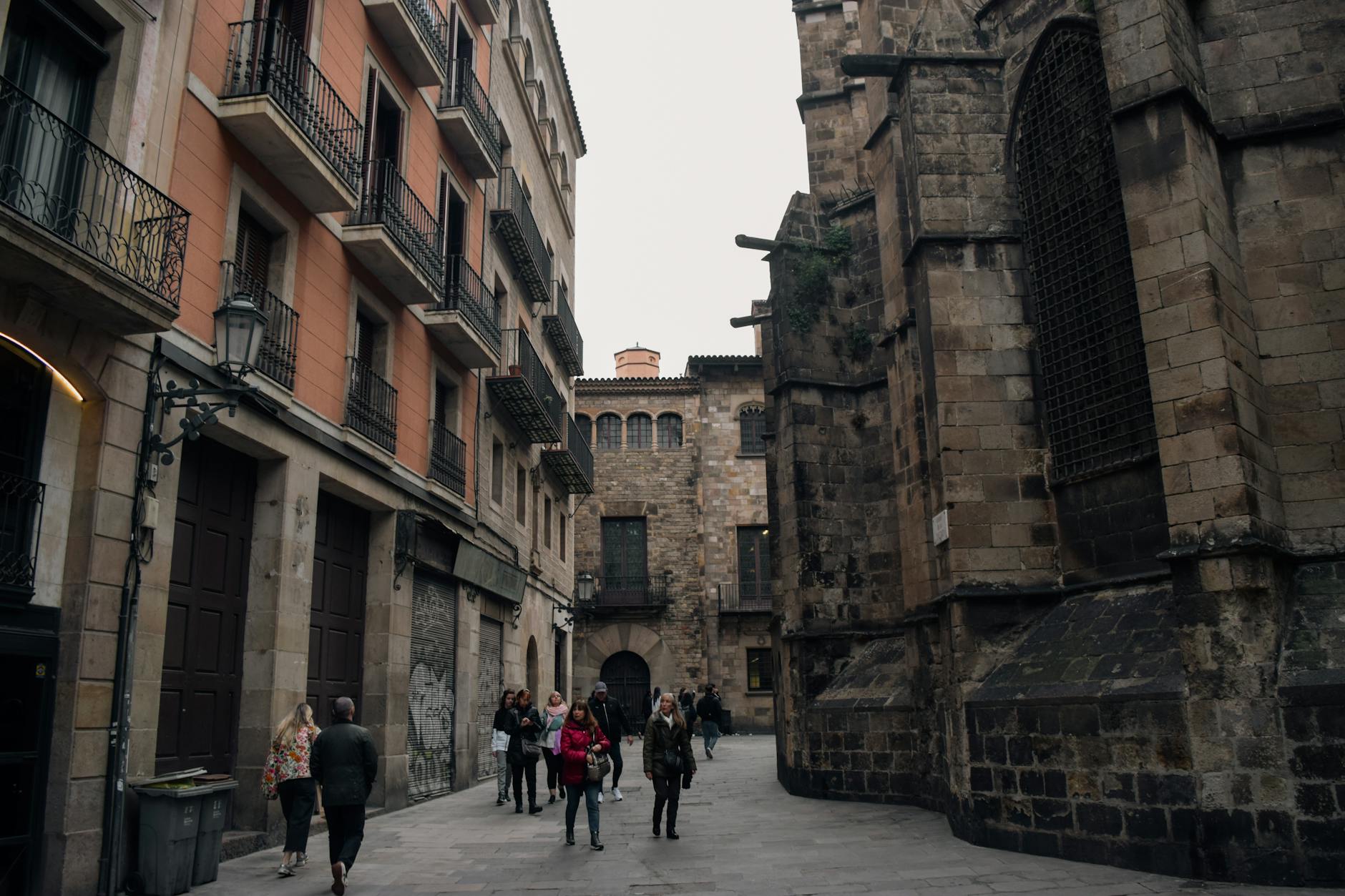
This is the ancient heart of the city, a dense tangle of medieval lanes built over the original Roman settlement. You can still find sections of Roman wall tucked between tapas bars. The Cathedral, the Plaça Reial, and the Pont del Bisbe are all here.
The problem with the Gòtic is that it’s been almost entirely colonized by tourism. Most of the restaurants on the main drag are mediocre and expensive. But go one block off the beaten path - toward Carrer del Parlament or into the quieter lanes near the Temple d’August - and you’ll find genuinely good pintxos bars and local cafés. Stay here if you want to be in the absolute center and don’t mind navigating narrow streets. Expect to pay roughly $150–$250 per night for a decent mid-range hotel.
El Born (Sant Pere, Santa Caterina i la Ribera)
If Gòtic is the past, El Born is the past made cool. This neighborhood just east of the Gothic Quarter is Barcelona’s most stylish barrio - a mix of medieval bones and genuinely excellent restaurants, independent boutiques, and cocktail bars that don’t feel like they’re trying too hard.
The Basílica de Santa Maria del Mar is arguably the most beautiful church in Barcelona (more so than the Cathedral, many would argue), and the Born Cultural Centre - built inside a spectacular 19th-century iron market - is worth an hour of your time. The Mercat de Santa Caterina, with its wild mosaic roof, is the local alternative to the overcrowded Boqueria.
Eat at any of the small restaurants on Carrer del Parlament or around Carrer del Rec. Budget roughly $20–$35 per person for a proper lunch with wine.
Barceloneta
Barcelona’s beach neighborhood is exactly what you’d expect: loud, sandy, full of tourists in summer, and genuinely fun if you approach it with the right attitude. The grid of narrow streets behind the beach dates to the 18th century and still has a working-class maritime character, with older residents who’ve somehow held on despite the relentless gentrification pressure.
The beach itself is clean and well-organized, though crowded from June through September. Walk north toward the Poblenou beaches (Mar Bella, Bogatell) if you want fewer people and a more local crowd. For seafood, skip the tourist traps right on the Passeig Marítim and head to La Cova Fumada, a cash-only bar on Carrer del Baluard that invented the bombas (potato croquettes) and makes some of the city’s best seafood snacks for a few euros each.
Eixample
The Eixample (pronounced Eh-SHAM-pluh) is Ildefons Cerdà’s 19th-century grid expansion of Barcelona - a vast, orderly neighborhood of wide octagonal blocks, boulevards, and some of the most extraordinary modernista architecture in Europe. Gaudí’s Sagrada Família and Casa Batlló are here, as is Domènech i Montaner’s Casa Lleó Morera and Puig i Cadafalch’s Casa Amatller.
The neighborhood splits into the Right Eixample (Dreta) and Left Eixample (Esquerra). The left side is where Barcelona’s LGBTQ+ scene is centered, particularly around Carrer del Consell de Cent - an area locally known as the Gayxample. It’s also where you’ll find some excellent Basque pintxos bars on Carrer del Consell de Cent and Carrer de Muntaner.
The Eixample is genuinely pleasant to walk through and stay in. Hotels here range from roughly $120–$400 per night, and you’re well-connected to the metro. It’s more residential and less claustrophobic than the Old City.
Gràcia
This is the neighborhood Barcelona locals point to when they want to prove the city isn’t just for tourists. Gràcia was an independent village until it was absorbed into Barcelona in 1897, and it still behaves like one - locally owned cafés, bookshops, small theaters, and the best concentration of plaças (squares) in the city. Plaça del Sol, Plaça de la Virreina, and Plaça de la Vila de Gràcia are all lined with terraces where locals sit for hours over a single coffee.
The Mercat de l’Abaceria is worth a visit, and Park Güell (technically at the edge of Gràcia) is best visited right at opening time (8am) before the tour groups arrive. If you’re staying for a week or more, renting an apartment in Gràcia makes enormous sense - you’ll quickly feel like a regular somewhere.
Poblenou
This former industrial district east of the city center is Barcelona’s answer to Brooklyn or Shoreditch - warehouses converted into design studios, tech startups, craft breweries, and a genuinely emerging restaurant scene. The Rambla del Poblenou is a quieter, more local version of Las Ramblas where you can actually sit at a café without being hassled.
Poblenou rewards slow exploration. Look for street art along Carrer de Pallars, grab coffee at Federal Café, and check what’s on at Razzmatazz, the city’s best mid-size music venue. This is the neighborhood to stay in if you want to be adjacent to the beach without the Barceloneta chaos, and you prefer an emerging neighborhood feel. Accommodation here tends to run roughly $100–$180 per night.
Montjuïc and Poble Sec
Montjuïc is the hill, Poble Sec is the neighborhood at its foot, and together they form one of Barcelona’s most rewarding areas to explore. Poble Sec’s Carrer de Blai is famous for its pintxos bars - you can eat exceptionally well here for roughly $15–$20, grazing from bar to bar. The neighborhood has a strongly local character and some excellent natural wine bars and independent restaurants.
Up on Montjuïc itself: the Fundació Joan Miró is genuinely world-class and rarely as crowded as the Picasso Museum. The Castell de Montjuïc has complex, difficult history (it was used as a political prison under Franco) but offers panoramic views worth the cable car ride. On summer weekends, the Magic Fountain show at the base of the hill is free and surprisingly charming.
Top Experiences Across the City
- Mercat de Sant Antoni: The best market in Barcelona, reopened after renovation, with an excellent Sunday book market surrounding it. Far less touristy than La Boqueria.
- Vermouth hour: Between noon and 2pm on weekends, locals sit for vermut (vermouth) with olives and anchovies. Join them anywhere in El Born or Poble Sec.
- The Palau de la Música Catalana: Even if classical music isn’t your thing, tour this insane modernista concert hall - stained glass ceiling included.
- Walk the Passeig de Gràcia at dusk: The light hits the modernista facades differently in the evening, and the crowds thin out.
Practical Tips
Getting There
Barcelona–El Prat Airport (BCN) is served by dozens of European carriers, plus transatlantic routes from the US and Latin America. The Aerobus runs directly to Plaça de Catalunya in about 35 minutes for roughly $7 each way. A taxi runs roughly $35–$45. The metro doesn’t directly connect the airport to the center - the Aerobus or taxi are your best options.
Getting Around
Barcelona is best navigated by metro, on foot, and - increasingly - by bike. The TMB metro system is clean, frequent, and covers most of the city. A T-Casual 10-trip card costs roughly $12 and works across metro, bus, and tram. Taxis are metered and reasonably priced for short trips. Avoid tourist buses - they’re expensive and inefficient.
Walking between El Born, the Gothic Quarter, and Barceloneta is entirely feasible. Gràcia is a pleasant uphill walk from the Eixample. For Montjuïc, take the cable car or the funicular from Paral·lel metro station.
Accommodation Tips
Book well in advance, especially for spring and fall. The Eixample and El Born offer the best balance of location, quality, and value. Avoid hotels directly on Las Ramblas - they’re overpriced and you’ll be woken by noise at all hours. Renting an apartment for stays of five nights or more almost always makes financial and experiential sense. Airbnb has been restricted in Barcelona due to housing pressure, so use licensed platforms or established rental agencies.
Budget travelers can find clean hostels in El Born and the Gothic Quarter for roughly $30–$50 per night. Mid-range hotels in Eixample run $130–$200. For something special, boutique hotels in El Born or renovated apartments in Gràcia offer the most authentic experience.
One Last Thing
Barcelona rewards the unhurried. The city runs on a different clock - lunch starts at 2pm, dinner rarely before 9pm, and nightlife doesn’t begin until midnight. Adjust your rhythm to theirs, resist the urge to check everything off a list, and at some point just sit in a square with a glass of cava and watch the city happen around you. That’s when Barcelona gives you its best.