The Road That Earns Its Reputation
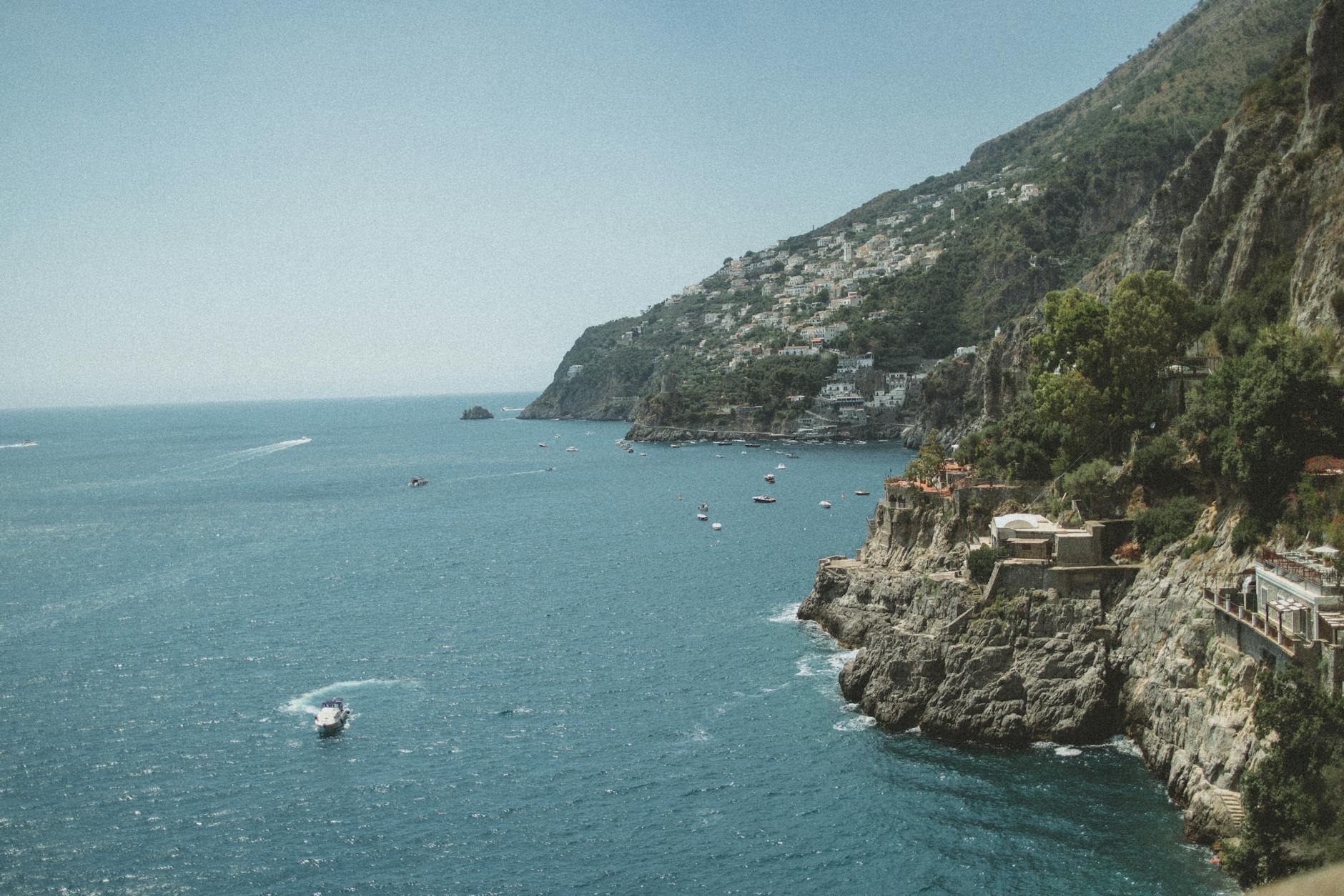
The SS163, better known as the Nastro Azzurro - the Blue Ribbon - is roughly 40 kilometers of two-lane asphalt carved into vertical limestone cliffs above the Tyrrhenian Sea. On paper, it connects Sorrento to Salerno. In practice, it is one of the most exhilarating and occasionally terrifying drives in Europe. Buses the size of shipping containers share lanes with delivery scooters, tourist convertibles, and elderly Fiats with absolutely no regard for personal space. You will hug the mountain wall and watch your passenger’s knuckles go white. And when you stop - which you must, often - the view will make everything worth it.
This is not a road trip for covering distance. The entire coastline fits inside an afternoon if you do not stop. The point is to stop constantly, eat well, swim when the mood strikes, and let a stretch of Italian coastline that has been stunning people since the Roman Empire do its work on you.
When to Go
May and early June are the sweet spot. The sea is warming up, hotel prices have not yet hit peak-season madness, and the road is busy but not gridlocked. Late September and October are equally good - arguably better, because the summer crowds have thinned, restaurant reservations are easier to come by, and the light takes on a golden quality that photographers chase for years.
July and August are an exercise in patience. The road can back up for hours between Positano and Amalfi town. If you must visit in summer, drive before 9am or after 7pm, or skip the car entirely and use the ferries. December through February brings closures, landslides, and many shuttered guesthouses - though if you find the coast in a winter fog, it has a melancholy grandeur that is its own reward.
The Route: West to East
Most travelers base themselves in Naples and drive the coast west to east, starting near Sorrento. This puts you on the uphill mountain side coming out of the tighter bends, which is psychologically easier than hanging over the cliff edge. That said, if you’re ending in Salerno, east to west works just as well.
Sorrento
Sorrento is the logical starting point - well-connected to Naples by the Circumvesuviana train, and far enough from the most congested stretch to let you ease in gently. It sits on a tufa cliff above the water, all lemon groves and Belle Époque hotels. Spend a night here before the drive. Pick up a bottle of local limoncello (the Gargiulo distillery on Via Fuorimura has been doing it properly since 1881), eat spaghetti alle vongole somewhere with a sea view, and get to bed early.
Positano
Positano is the postcard. The houses stack up the hillside in terracotta and ochre and pale pink, tumbling toward a small pebbly beach flanked by striped umbrellas. It is also deeply, defiantly expensive. A decent hotel room runs roughly $350–600 per night in season. A cocktail on a terrace will cost you roughly $18. You are paying for the view and the right to say you were there.
Park in one of the upper lots (roughly $4–6 per hour) and walk down - the descent into town via Via Pasitea takes about 20 minutes and gives you the full theatrical reveal. The main beach, Spiaggia Grande, charges for sunbeds. A short walk west brings you to Fornillo beach, which is smaller, quieter, and free. The Church of Santa Maria Assunta in the main square holds a 13th-century Byzantine icon of the Black Madonna that is worth five minutes of genuine attention before the Instagram crowds arrive.
Praiano and Furore
Between Positano and Amalfi, most tourists accelerate through Praiano and Furore, which is their loss. Praiano is a working village with a real community still intact, and Marina di Praia - a tiny fishing inlet accessible by a steep path - has arguably the best snorkeling on the coast. Furore is stranger: a fjord-like gorge where the village sits inland but a handful of houses cling to the cliffs above the sea. Every August, cliff divers hurl themselves into it for the Furore World Cup cliff diving competition. In May or October, you might have the gorge nearly to yourself.
Amalfi Town
The town that gives the coast its name was, improbably, a major maritime republic that rivaled Venice and Genoa in the 9th and 10th centuries. The Duomo di Sant’Andrea, with its Arab-Norman facade and striped arches, is the physical evidence of that era’s wealth and ambition. Climb all 62 steps to appreciate it properly.
Amalfi is more affordable than Positano - hotels in the roughly $180–300 range exist here, and the town has enough genuine local commerce (paper shops selling the handmade carta amalfitana, fishmongers, an actual hardware store) to feel less like a theme park. The Valle delle Ferriere hiking trail begins at the edge of town and climbs through lemon groves and ancient ruins to a waterfall. It takes about two hours round-trip and is worth every minute.
Ravello
Ravello sits 350 meters above the sea, technically inland but spiritually the emotional peak of the entire coastline. Drive or take the bus up from Amalfi town (roughly 20 minutes, roughly $1.50 on the SITA bus). The Villa Rufolo and its terraced gardens - which inspired Wagner while he was writing Parsifal - are justifiably famous. The views from Villa Cimbrone, particularly the Terrazza dell’Infinito lined with classical busts, will stop you cold. Ravello also hosts a serious classical music festival each summer, drawing world-class performers to an outdoor stage with the Mediterranean as a backdrop.
Vietri sul Mare and Salerno
The eastern end of the drive eases you back into the real world. Vietri sul Mare is known throughout Italy for its hand-painted ceramics - the blue and yellow majolica you’ve seen in every Italian kitchen shop probably came from here. Stock up before driving into Salerno, which is a proper working city with excellent seafood, Norman castles, and none of the tourist inflation of Positano. If you’re flying home from Naples, Salerno makes a fine last night: eat well, sleep cheap, and take the train back north in the morning.
Top Experiences You Shouldn’t Skip
Take a ferry. The ferry network connecting Sorrento, Positano, Amalfi, and Salerno runs from roughly April through October. A single leg costs roughly $8–15. Use it at least once - the view of the cliffs from the water is categorically different from the road, and you’ll arrive somewhere without having to find parking.
Hike the Path of the Gods. The Sentiero degli Dei runs along the ridge above Positano, connecting Bomerano (accessible by bus from Amalfi) to Nocelle, with views that justify every piece of hyperbole ever written about this coastline. The hike is roughly 7.5 kilometers and takes about 3–4 hours. Wear proper shoes.
Swim somewhere inconvenient to reach. The best swimming spots on the coast require effort - a steep path, a boat, or a 15-minute walk. They are worth it. The beaches accessible by car are the crowded ones.
Practical Information
Getting there: Naples is the gateway. Capodichino Airport connects to most European hubs and has transatlantic connections via Rome. The Circumvesuviana train runs to Sorrento in about 65 minutes (roughly $4). If you’re renting a car, pick it up in Naples and drop it in Salerno - driving into Naples itself is an entirely different category of experience that you do not need.
Getting around: A small car is essential for flexibility - rent the smallest category available, typically a Fiat 500 or similar. Avoid anything wider than a standard sedan. The SITA bus network covers the entire coast and is genuinely cheap (roughly $1.50–3 per leg), but in summer it runs infrequently and overcrowded. Scooter rental is available in Sorrento, Positano, and Amalfi for roughly $60–80 per day - experienced riders only.
Parking: Genuinely difficult everywhere. Budget time for it. Most towns have fee-based lots clearly signed from the main road. Do not attempt to park on the road itself in Positano - the tow trucks are efficient and the retrieval fee is roughly $120.
Accommodation: Book at least two months ahead for May through September. Positano and Ravello are expensive across the board; Amalfi and Praiano offer better value. Agriturismos in the hills above the coast - the area around Tramonti produces excellent wine and has several working farms with rooms - run roughly $90–140 per night and are among the best-kept secrets on the entire drive.
Budget: Realistically, plan for roughly $200–400 per person per day covering a mid-range hotel, meals, parking, and ferry or bus tickets. You can do it for less by staying in Salerno or Vietri, eating at lunch rather than dinner, and using the bus. You can spend considerably more without trying hard in Positano.
A Final Note
The Amalfi Coast rewards surrender. The travelers who fight the traffic, rush between stops, and try to see everything in a single day come away frustrated. Give it three nights minimum. Leave your schedule loose. When you find a view that makes you want to sit down and do nothing for an hour, do exactly that. The road will still be there when you’re ready.